
What is Advance Excel
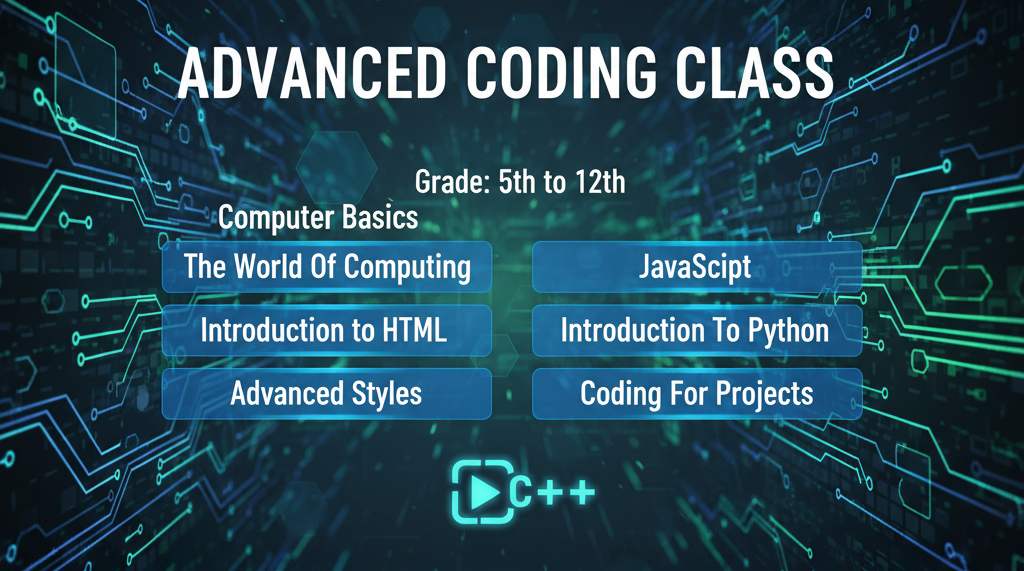
Advanced coding classes move beyond introductory concepts to immerse students in the intricate, real-world demands of modern software engineering. They focus on depth, performance, scale, and best practices required to build and maintain complex systems. Unlike beginner courses that focus on syntax and basic algorithms, the advanced curriculum centers on architectural patterns, large-scale data handling, concurrency, and professional development tools.
These courses are designed for individuals who are already proficient in at least one programming language (such as Python, Java, or C++) and possess a solid foundation in data structures and algorithms. The objective is to transition a competent coder into a highly skilled software engineer capable of leading development projects.
Core Topics in Advanced Coding
Advanced classes typically cover subjects that directly address the challenges of high-volume, high-traffic applications and systems:
| Area of Study | Key Concepts Covered | Application and Goal |
| Data Structures & Algorithms | Graph algorithms, Dynamic Programming, Advanced Trees (e.g., Trie, Segment Tree), Time/Space Complexity Analysis ($\mathcal{O}$ notation). | Optimizing performance for large data sets and solving complex, non-trivial problems efficiently. |
| System Design & Architecture | Microservices, Monolithic vs. Distributed Systems, Load Balancing, Caching Strategies (CDN, Redis), Databases (SQL vs. NoSQL). | Designing scalable, fault-tolerant, and maintainable applications, understanding the trade-offs of different architectural choices. |
| Concurrency & Parallelism | Threads, Processes, Locks, Semaphores, Thread Safety, Asynchronous Programming (Async/Await). | Building high-performance applications that can execute multiple tasks simultaneously and utilize modern CPU cores efficiently. |
| DevOps & Tooling | CI/CD (Continuous Integration/Continuous Deployment), Docker, Kubernetes, Cloud Platforms (AWS/Azure/GCP), Version Control (Advanced Git). | Automating the software delivery pipeline, deploying applications reliably in containerized environments, and mastering professional collaboration tools. |
| Testing & Quality Assurance | Unit Testing, Integration Testing, Mocking, Test-Driven Development (TDD), Performance Testing. | Ensuring code stability, minimizing bugs, and maintaining high software quality over the project lifecycle. |
The Shift from Coding to Engineering
The primary difference in an advanced class is the shift in focus from “how to code” to “how to engineer.” Students learn to think critically about system constraints, such as network latency, memory limits, and security vulnerabilities. For example, when studying concurrent programming, an advanced class won’t just explain how to create a thread; it will explore the potential for race conditions and deadlocks, and teach precise synchronization mechanisms using semaphores or mutexes.
Furthermore, advanced classes emphasize Software Engineering Principles like SOLID, design patterns (e.g., Factory, Observer, Strategy), and refactoring techniques. Students are often tasked with large-scale projects, such as building a simplified social media feed or a scalable e-commerce backend, forcing them to apply architectural principles and best practices in a holistic manner. Mastery of an advanced coding curriculum equips a professional to not only write functional code



Leave a Reply