
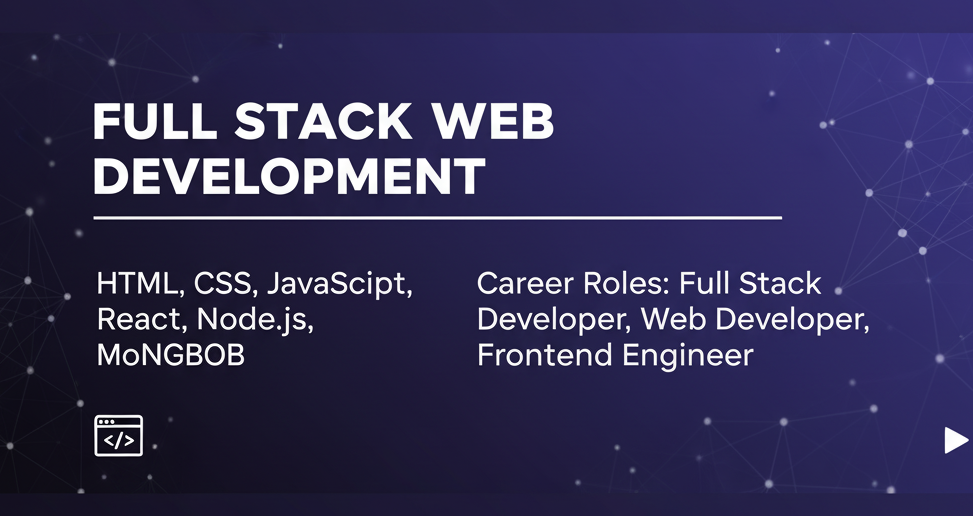
What is Full Stack Web Development
Full-stack web development refers to the process of designing, creating, and maintaining a complete web application, encompassing both the user-facing interface (frontend) and the server-side logic and database (backend). A full-stack developer is proficient across all layers of the application stack, allowing them to manage a project from conceptual design to final deployment. This holistic understanding is crucial for optimizing application performance, ensuring seamless integration between components, and troubleshooting complex issues.
The full-stack approach is highly valued in the industry because it enables a single developer or a small team to rapidly build minimum viable products (MVPs) and maintain coherence across the entire system. It requires proficiency in various technologies, broadly categorized into client-side and server-side stacks.
The Two Pillars of Full-Stack Development
Full-stack development is fundamentally divided into two interconnected domains, each requiring specialized knowledge:
| Component | Focus Area | Core Technologies/Tools | Primary Responsibility |
| Frontend (Client-Side) | User Interface, User Experience (UI/UX), Interactivity, Browser Performance. | HTML (Structure), CSS (Style), JavaScript (Logic), Frameworks like React, Angular, or Vue.js. | What the user sees and interacts with in the browser. |
| Backend (Server-Side) | Data Storage, Application Logic, Security, Authentication, API Development. | Server-side languages like Node.js, Python (Django/Flask), or Java (Spring), Databases like PostgreSQL, MongoDB, or MySQL. | How the application works, managing data and business rules. |
| Deployment/DevOps | Server management, scalability, continuous integration, and delivery. | Git, Docker, AWS/Azure/GCP, CI/CD tools (e.g., Jenkins). | Getting the application online and ensuring its stability. |
Export to Sheets
Integrating the Stack
The final piece of full-stack development is understanding how the frontend and backend communicate. This is primarily facilitated through Application Programming Interfaces (APIs), often built using the REST or GraphQL architectural styles.
When a user interacts with the frontend (e.g., clicks a “Submit” button), the JavaScript code makes an API request to the backend server. The backend processes the request, interacts with the database to retrieve or modify data, and sends a structured response (usually JSON) back to the frontend. The frontend then updates the UI without requiring a full page reload, creating a dynamic user experience.
The most popular technology combinations used by full-stack developers are often referred to by acronyms, such as MERN (MongoDB, Express.js, React, Node.js) and LAMP (Linux, Apache, MySQL, PHP). Ultimately, a full-stack developer acts as the technological bridge between the user’s screen and the server’s data, ensuring the entire web application functions securely and efficiently. 🌐



Leave a Reply